In line with the national "Work Safety
Month" campaign theme of "Everyone Speaks Safety, Everyone Knows
Emergency Response," and grounded in the specific operational
characteristics of high-end LNG shipping, shipbuilding, and repair &
maintenance services, CLNG has implemented comprehensive safety management
across all domains, including offshore
operations, shipyard construction, and office safety. Focusing on four key
levers—on-site control, hazard rectification, emergency response
training, and collaborative governance—CLNG has rolled out targeted safety measures, strictly enforced safety
responsibilities at all levels, and strengthened full-chain, role-specific safety controls. Through these efforts, CLNG has firmly established
a safety culture rooted in the principle of “People-Oriented, Safety-First” and has effectively safeguarded the operational safety baseline in
energy shipping.
Uniting efforts on the construction
frontline to reach safety milestones, with shipyard-enterprise collaboration
reinforcing on-site safety control
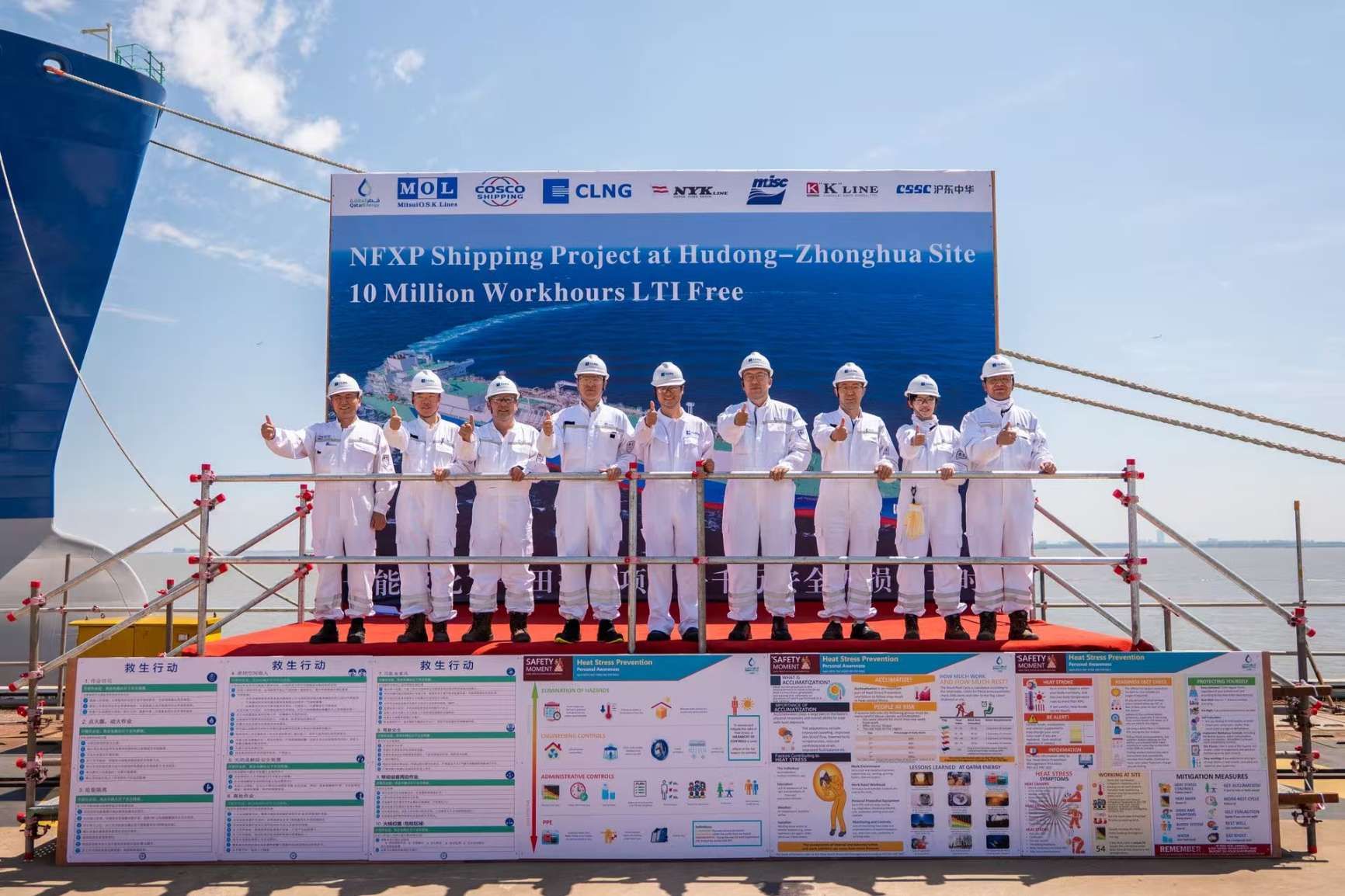
On June 10, a ceremony celebrating 10
million safe work hours on the QatarEnergy project was successfully held at the
Hudong-Zhonghua shipyard. CLNG and Hudong-Zhonghua have cooperated deeply in
the field of LNG shipbuilding for over two decades, jointly establishing a
long-term standardized construction safety management mechanism. Given the
complexity of construction processes, the multitude of risk points, and the
challenging environments involving elevated work, confined spaces, and
cross-operations, where operational control
is difficult and compliance standards are stringent. The achievement of this 10-million safe-work-hour milestone
represents a tangible outcome of closed-loop multi-party control involving the
shipowner, shipyard, and supervisory team, as well as standardized operations
by all personnel.
Sheng Shanxing, General Manager of CLNG, led a delegation to
attend the event and delivered a speech. He highly commended the front-line construction personnel for their
adherence to operational standards and strict compliance with construction
discipline. He recognized Hudong-Zhonghua Shipbuilding's project team for its
phased and grid-based on-site safety management model, which relies on
designated zone-specific supervision and a permit system for high-risk
operations to routinely control on-site risks, thereby establishing a quality
benchmark for safety management in LNG shipbuilding projects. During the event,
outstanding individuals in safety-related and production roles were selected
and commended. By leveraging these role models, the initiative encourages
front-line operators to strictly follow operating procedures and practice safe
operations.
Deepening Government-Enterprise collaborative oversight and advancing frontline closed-loop rectification of safety hazards
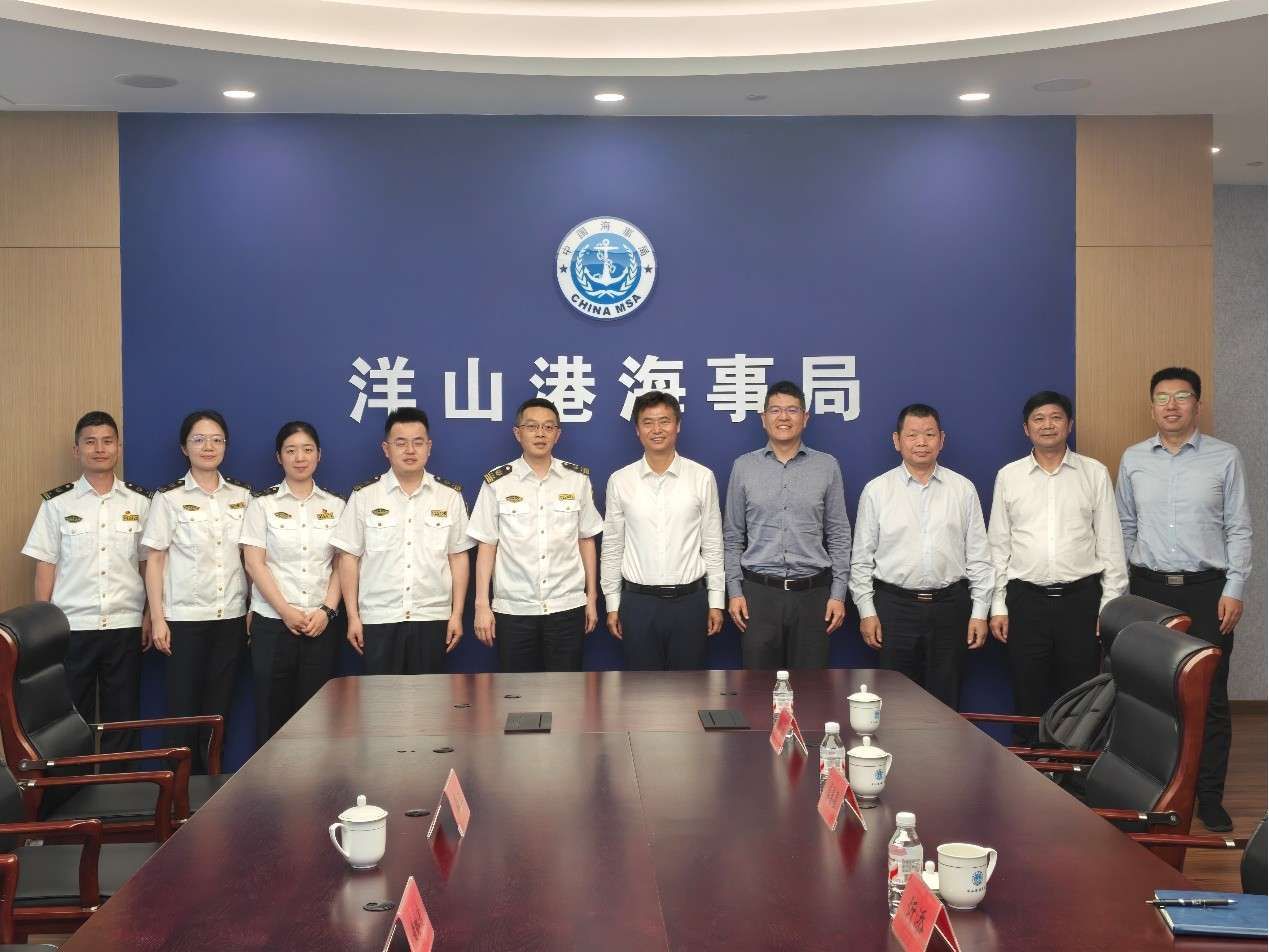
During Work Safety Month, the CLNG
management team visited the Yangshan Port Maritime Safety Administration. In
light of the company's actual LNG vessel
navigation, berthing, and maintenance operations, both parties engaged in
practical exchanges on vessel safety supervision while in port, joint
waterborne risk prevention, emergency coordination for maritime contingencies,
and shipping compliance management. They agreed on a normalized
government-enterprise coordination and joint inspection mechanism to precisely
align with the navigation control requirements for LNG clean-energy vessels,
collectively ensuring the safety of maritime traffic in the jurisdiction.
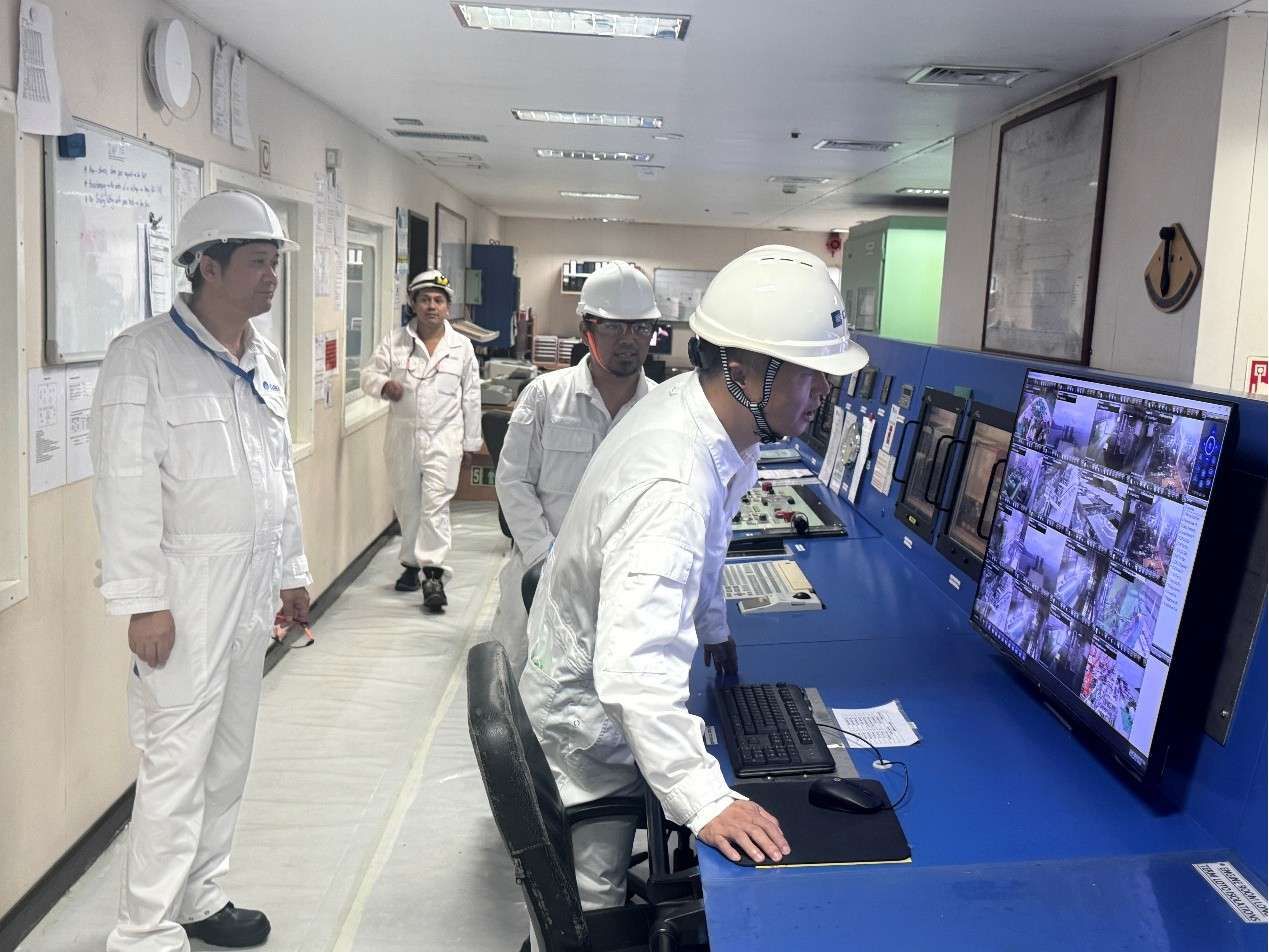
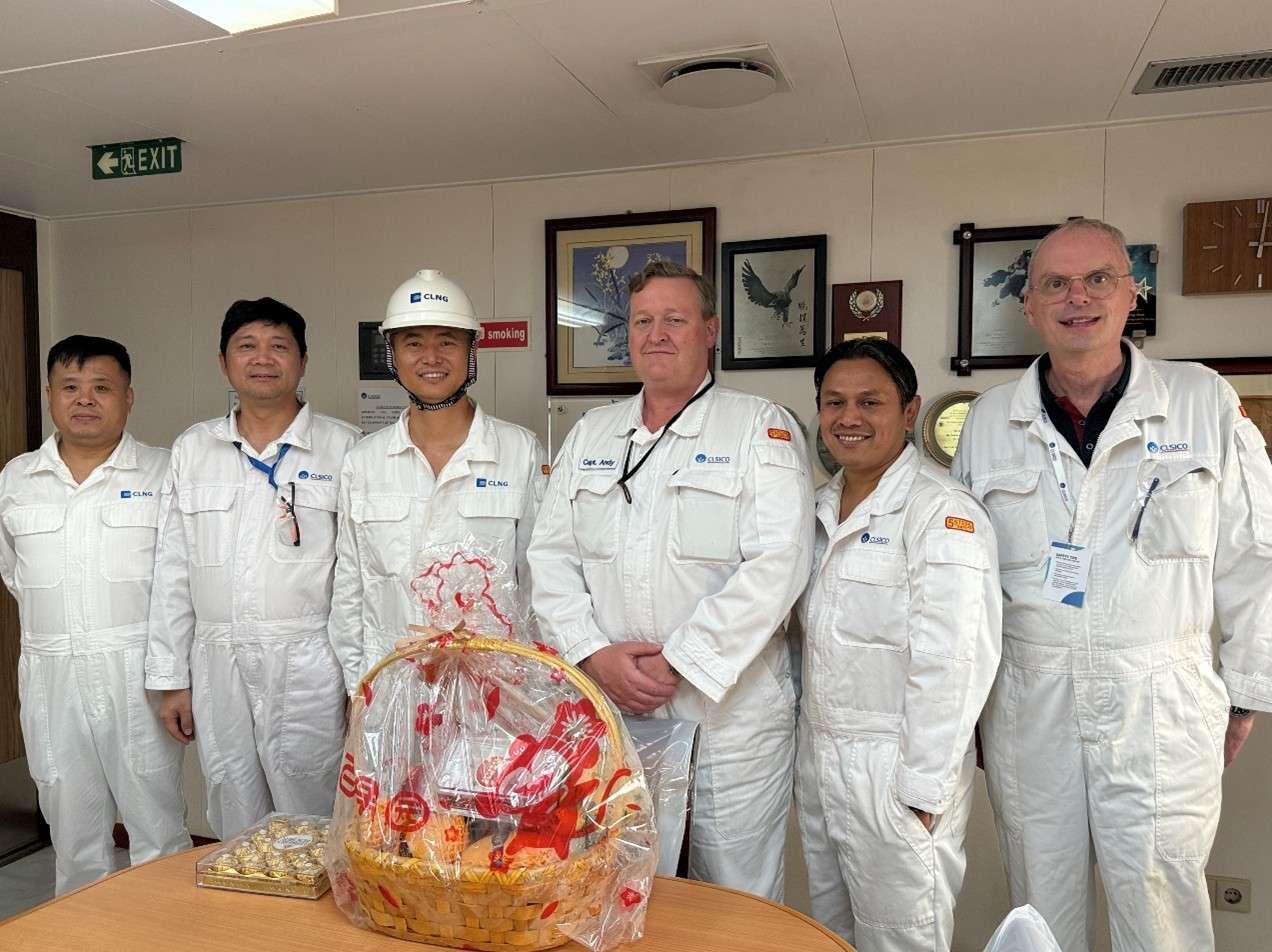
On June 17, on the eve of the traditional
Dragon Boat Festival, company leaders visited the Shekou Yiu Lian Dockyards to extend greetings to the crew of the "Dapeng
Moon," which was undergoing dry-dock repairs, and conducted safety
inspections and repair supervision. In line with the "Work Safety
Month" deployment, they required ship management personnel to: first,
deepen ship-shore coordination, maintain open information channels, and
implement all special initiatives to high standards; second, comprehensively
investigate hazards throughout the entire repair process, improve emergency
response plans, and ensure emergency equipment remains fully operational at all
times; third, balance schedule, quality, and safety, strictly enforcing
accountability at all levels to ensure the repair is completed safely, with
quality, and on schedule; and fourth, precisely address crew needs, strengthen
logistical support, and effectively safeguard crew welfare. Additionally, in
response to recent typical PSC inspection cases, the company continues to
strengthen all employees' awareness of compliance and controls, routinely
reinforcing vessel operations management, equipment maintenance and repairs,
and on-the-job practical training to solidify the operational safety baseline
and maximize charterers' operational efficiency.
Simultaneously strengthening office safety protocols and sharpening all employees' emergency response capabilities
On June 17, the Hong Kong office organized
the 2026 annual integrated fire emergency evacuation drill, with active
participation from employees in the Hong Kong office area. Prior to the drill,
the company provided targeted pre-drill safety briefings, clearly outlining
building evacuation routes, fire escape essentials, and basic self-rescue and
evacuation protocols. Once the office fire alarm was activated, on-duty
employees followed the unified direction of the property's fire safety
supervisors, assembled in an orderly manner in compliance with regulations, and
completed the entire evacuation process efficiently and orderly, with no
instances of non-compliant delays or crowding. Based on a realistic office fire
scenario, this drill tested employees'
emergency response and coordinated evacuation capabilities, further
strengthening the practical fire safety skills of all staff.
Focus on long-term, business-driven
control and firmly implement normalized safety management across all areas
This series of Work Safety Month activities
covered scenarios including shipbuilding, maritime transportation, shipyard
repair and construction, and office-based emergency response drills, aligning
closely with the company's integrated land-sea business operations. The
initiatives covered multiple areas such as benchmark cultivation, hazard
remediation, emergency drills, and coordinated collaboration.
Going forward, CLNG will remain closely
focused on its core production and business operations, with particular
attention to key areas including shipyard construction, maritime navigation,
vessel maintenance, and office safety. The company will continue to enforce the
three-tier safety responsibility system, routinely conduct on-site safety
inspections, job-specific safety
education, and realistic emergency drills, and collaborate with partner
shipyards and local regulatory authorities on coordinated risk management.
Through these sustained efforts, CLNG aims to practically consolidate a
comprehensive safety barrier, steadily ensure the smooth operation of its LNG
shipping business, and support regional clean energy transportation.